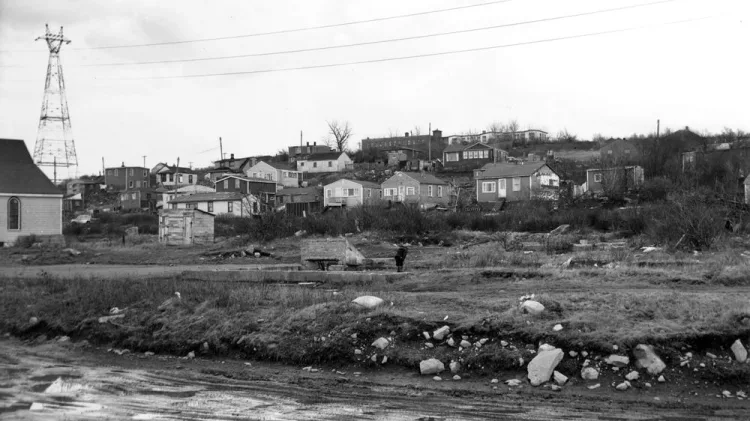
Africville: The Razing, The Racism and Resilience
When people think about Black Canadian history, they tend to think of Viola Desmond, the woman who fought back against racial discrimination at a cinema in Nova Scotia (and the face of the $10 bill!). However, Desmond wasn’t the only symbol of Black Canadian identity hailing from Halifax. The residents of Africville, once considered a safe haven for Black Canadians, fought to keep their precious community afloat, only to be torn apart in the name of “urban renewal”. Let’s dive into why the history of a small seaside village is so important to understanding the struggle against racism in Canada.
Origins
Africville was home to formerly enslaved people and refugees from the War of 1812. Located on the southern shore of Bedford Basin, residents ran fishing businesses and played hockey on the pond when it froze over. They’d go to the church where their strong connection to music was known, and it gave the people a strong sense of connection. Despite their flourishing culture, they were taken advantage of time and time again by the City of Halifax and the Canadian government as a whole. At first, it started with a lack of municipal services such as paved roads, garbage collection, and public transportation, even though the city collected taxes from them. It was clear that anti-Black racism influenced the decisions of the Halifax City Council as they continued to treat the village like an industrial site by installing slaughterhouses, human waste sites. and the Infectious Diseases Hospital there,, instead of placing them in Halifax. Things took a turn for the worse after the Halifax Explosion in 1917.
Halifax Explosion
Two ships crashed into each other in the city’s harbour, with one of them loaded with explosives for the First World War. This incident devastated Halifax and damaged Africville, leaving four people dead. Despite all the money Halifax had to rebuild its city, there were no efforts made to help the Africvillians; if anything, the Nova Scotian government’s neglect increased. The residents petitioned and protested for the right to basic public services, but they were largely ignored and dismissed. Halifax even built an open-pit garbage dump 350 meters from Africville. There was no consideration for the health and well-being of the locals, as this dump was ironically deemed “unacceptable” to place near communities like Fairview. The community earned a reputation as a “slum”, which ultimately led to the village’s destruction.
Demolition and Destruction
Many public meetings and councils were held to discuss plans to turn Africville into an industrial zone, thereby displacing approximately 400 people and 80 families from their homes. Many locals strongly opposed all the plans made against them, but their efforts were in vain. Their homes, their hard-earned land, their place of freedom, were mercilessly bulldozed until there was nothing left. The final nail in the coffin was the demolition of the Seaview United Baptist Church in 1967, which was once the centre of culture and joy for the Africvillians.
In exchange for this “urban renewal”, the locals were promised new homes in Halifax after 1969, but even that promise was broken. The community was torn apart, and those who chose to stay in Halifax struggled even to find a place to rent for a month. They didn’t have enough money to keep living there. They faced discrimination and were thus unable to get a job, despite having had jobs readily available in their once bustling community.
The Future of This Community
The fight to keep the community alive even after destruction never stopped. The longest civil rights protest in Canada’s history was held by a man named Eddie Carvery, a former resident, starting from 1970 up until 2019. He pitched a tent in the site of Africville one year after the demolition of the last home and lived there on and off for five decades. The government attempted to atone for their neglect and discrimination by declaring the land a “National Historic Site” in 1996 and getting Halifax Mayor Peter Kelly to apologize for the destruction of the site in 2010. But is that really enough?
Many Canadians consider their country to have a “cleaner” and “better” history when it comes to issues of racism, but they also ignore these moments in history that leave a big blemish on Canada’s past. It’s important to acknowledge the past to learn from our mistakes and look forward to a future where towns like Africville may never experience systematic racism, blatant abandonnement, and a lack of community ever again.
Sources:
- https://niche-canada.org/2021/02/17/africville-a-story-of-environmental-racism/
- https://www.thecanadianencyclopedia.ca/en/article/halifax-explosion
- https://thecanadianencyclopedia.ca/en/article/africville


